The UDC collects and preserves artifacts, rare books, documents, diaries, letters, personal records, and other papers of historical importance relating to the period 1861 to 1865. The Goodlett Memorial Library, located at the UDC Memorial Building to the Women of the Confederacy, in Richmond, Virginia, is the repository for this collection.
The Mrs. Simon Baruch University Award is a $2000 grant-in-aid of publication, presented in even-numbered years, for the purpose of encouraging research in Southern history.
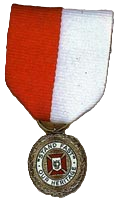
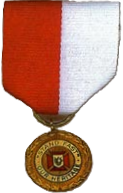
The Jefferson Davis Historical Silver Medal is awarded to students who excel in the preservation of Confederate history.
The Jefferson Davis Historical Gold Medal is given for outstanding contributions in furthering the study and preservation of Confederate history through historical research, writing, public speaking, and other points of special achievement in keeping with the historical aims and purposes of the Organization.
The Selina Norris Gray Award is presented for preservation work to recognize and encourage efforts to protect our shared heritage. Created in November 2025, it is named for the trusted personal maid of the Lee family who was left with oversight of Arlington during the War. Recognizing their historical value and concerned for the security of artifacts, Mrs. Gray helped ensure the family heirlooms that belonged to George Washington were safeguarded. This award, a wall plaque with certificate, highlights individuals, organizations and communities that are committed to preservation of Southern historic places, cultural traditions, architectural landmarks, art, textiles, memorials, which are increasingly at risk from encroaching development, vandalism, neglect, deterioration and/or historic revisionism.

On the local, state and national level, Daughters work with numerous civic organizations including homeless shelters, homes for battered women and children, hospital associations, and food banks.
Wind and flooding from Hurricane Helene devastated North Carolina on September 27, 2024, primarily in western Appalachian. The first picture is the bridge being built to assist the victims who lost a bridge to their home.
These bridges connect driveways to the main road. This first bridge is being built to help a family of seven.
The second picture is the bridge completed! The only thing left to do was to add the gravel on either side. Gravel was hard to come by in the North Carolina mountains because NCDOT was using it to repair many roads and bridges.

Education is and has always been a priority with the United Daughters of the Confederacy. The Organization offers a number of scholarships to those who meet certain criteria.
The Annabella Drummond McMath Scholarship provides women over the age of 30 with the opportunity to continue (or begin) their education.
The United Daughters of the Confederacy also presents a number of scholastic awards annually. Recipients are chosen by their academies or universities/colleges solely on the basis of merit.
The Citadel
The William Porcher DuBose Award to the First Honor Graduate and ranking cadet
Davidson College (N.C.)
George Robert Earle Grant-In-Aid
Union Theological Seminary (Richmond, Va.)
The Robert E. Lee Ministerial Scholarship
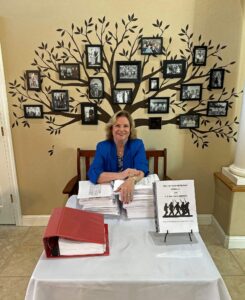
The Goodlett Memorial Library at the UDC Memorial Building contains material suitable for research on the War Between the States. It is open to members and researchers by appointment with the Library Coordinator.
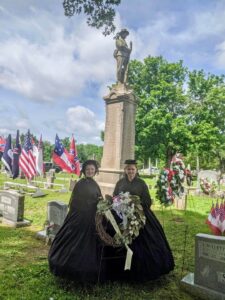
In 1898, President William McKinley, a Union veteran, asked that the North “in a spirit of fraternity” share with the South the care of the graves of Confederate soldiers. In consequence, a Confederate section was designated in Arlington National Cemetery, and the remains of 267 Confederate soldiers were reinterred in this section. Upon receiving permission from Secretary of War William Howard Taft to place a Confederate monument in Arlington Cemetery, the United Daughters of the Confederacy embarked on a campaign to secure funds to build the monument. This 32.5-foot bronze monument contains 32 life-size figures. The dominating feature is a woman of heroic size who represents the South. The monument was unveiled on June 4, 1914. In accepting for the nation, President Woodrow Wilson said: “I am not so much happy as proud to participate in this capacity on such an occasion; proud that I should represent such a people.”
In 1913, Congress appropriated $400,000 to establish a memorial commemorating the services of the women of the North and the South during the period 1861 to 1865; another $300,000 was contributed by patriotic Americans. This memorial is the permanent headquarters of the American Red Cross Society in Washington, D.C. Three Tiffany stained glass memorial windows were donated to the building: one by the Women’s Relief Corps of the Grand Army of the Republic, one by the United Daughters of the Confederacy, and one jointly by the two organizations. A marble tablet on the wall of the landing contains the following marker lettered in gold: A Memorial built by the Government of the United States and Patriotic Citizens to the Women of the North and the Women of the South by a now United Country that their labors to mitigate the sufferings of the sick and wounded in war may be perpetuated, this memorial is dedicated to the service of the American Red Cross.
The United Daughters of the Confederacy placed memorials to General Robert E. Lee and General Thomas Jonathan “Stonewall” Jackson in the National Cathedral in Washington, D.C., in 1957. These memorials, in the form of a bay, contain two tracery windows depicting episodes in the lives of the two generals. The windows were removed in 2017 and their whereabouts are unknown to us.
On state and local levels, memorial observances are held annually to remember not only the men who served in the War Between the States but also the veterans of all wars.
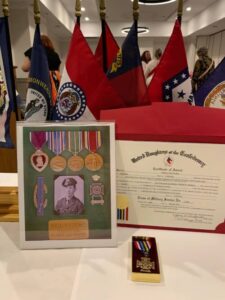
The United Daughters of the Confederacy has always come to the aid of the nation in times of crisis. At the beginning of World War I, the President General of the UDC wrote to President Woodrow Wilson and offered the loyal support of the 100,000 United Daughters of the Confederacy in whatever capacity their services would be needed. During the war, the UDC supported 70 hospital beds at the American Military Hospital at Neuilly, France, at a cost of $42,000 per year. It contributed $82,069 for French and Belgian orphans. On the home front, UDC members purchased $24,843,368 worth of war bonds and savings stamps. In addition, $841,676 was donated to the Red Cross and other war relief work.
During World War II, the United Daughters of the Confederacy was the first national women’s organization to offer its service to the United States government for war relief. The work of the UDC was recognized by its inclusion at various national conferences held by the War Department. The UDC assisted the National Nursing Association by giving financial support for student nurses until the Bolton Act was passed by the United States Congress creating the first Cadet Nurse Corps. The UDC also donated ambulances for use at European battle sites and donated a blood plasma unit through the Red Cross. Daughters sold $18,534,213 in war bonds. The Red Cross commended the UDC for its outstanding work and contributions.
During the Korean War, the Vietnam Conflict , and Desert Shield/Desert Storm — and in the aftermath of September 11 — the United Daughters of the Confederacy has continued its patriotic work. Daughters donate thousands of dollars and spend countless hours every year working with the nation’s veterans in Veterans Affairs (VA) facilities and nursing homes. The UDC presently has representatives and deputies in VA medical centers in 18 states.
The United Daughters of the Confederacy honors men and women of Confederate descent and those without who have served their country in time of war or crisis by bestowing a variety of military and civilian service awards. Many chapters participate in Wreaths Across America every December, send supplies to deployed military and donate items, time and money to veterans hospitals and organizations.